
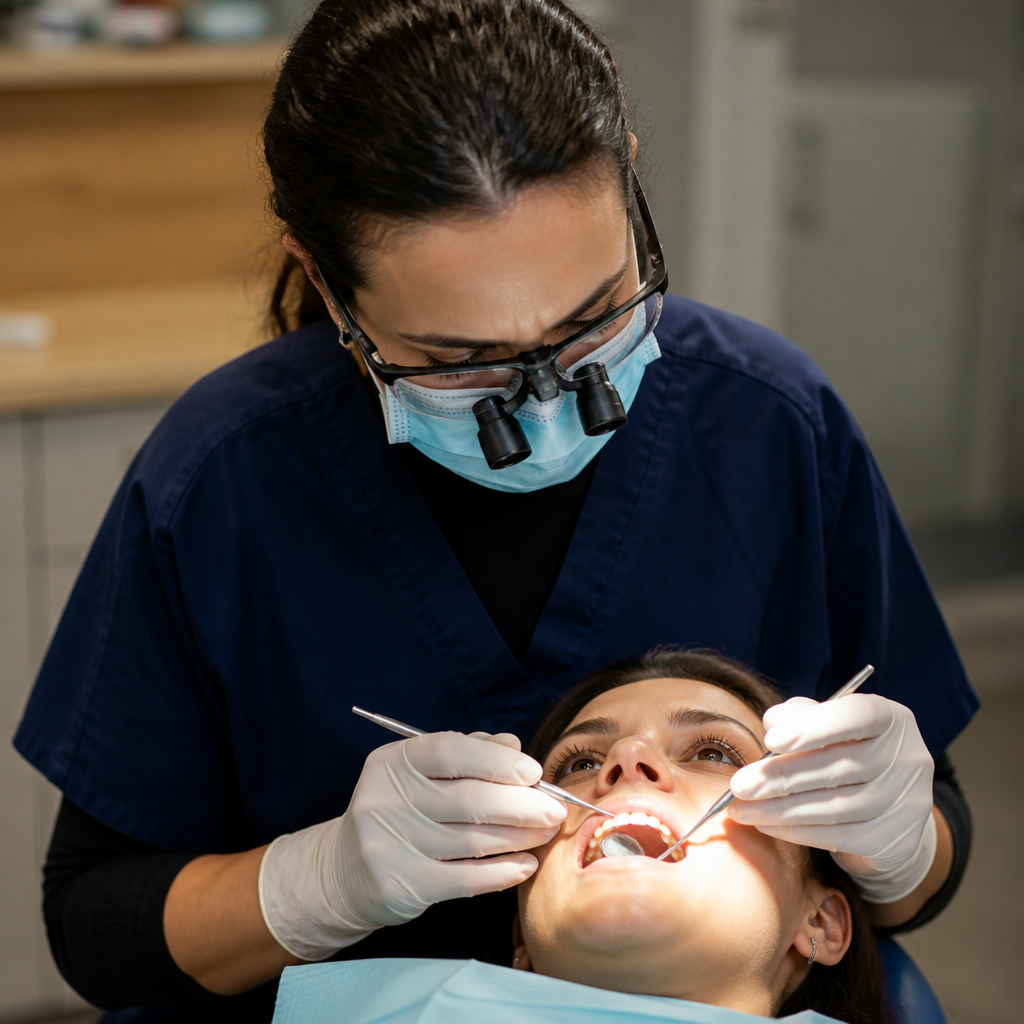
What to Expect at an Emergency Dental Appointment in Darwin
A dental emergency is stressful enough without worrying about what will actually happen when you get to the dentist. If you have never had an emergency dental visit before — or it has been a while since you have seen any dentist — this guide walks you through exactly what to expect at Compass Dental, step by step.
Step 1: The Phone Call
When you call (08) 8995 9530, you will speak with our reception team during business hours or our AI dental assistant after hours. Either way, we will ask:
- What happened and when it started
- Where the pain or problem is
- How severe the pain is (so we can prioritise appropriately)
- Whether you have any medical conditions or take regular medications
Based on this, we will give you an approximate timeframe for your appointment and a rough cost range so you know what to expect. Most emergency patients are seen the same day they call.
After hours? Our AI assistant answers immediately — no voicemail, no waiting until Monday. It can provide first-aid guidance for your specific situation, book you into the next available slot, and alert the dentist directly if your case needs urgent attention.
Step 2: Arriving at the Practice
Compass Dental is at Suite 102/12 Salonika St, Parap — inside The Avenue building, about 5 minutes from Darwin CBD. Free parking is available in the building car park.
When you arrive:
- Head to reception on Level 1
- If you are a new patient, there is a short medical history form to fill out (you can also complete this online before you arrive)
- Bring your health fund card, Medicare card, DVA card, or any other relevant documentation
- If a tooth or crown has come out, bring it with you in milk or a sealed container
We will get you into the chair as quickly as possible. Emergency appointments are prioritised over routine bookings.
Step 3: Assessment and Diagnosis
Dr Thien Pham or one of our team will:
- Listen — We will ask you to describe the problem in your own words. Where does it hurt? When did it start? What makes it better or worse?
- Examine — A focused clinical examination of the affected area, checking for swelling, fractures, mobility, and signs of infection
- Image — In most cases, we will take a targeted X-ray (periapical) or a panoramic X-ray (OPG) to see what is happening beneath the surface. This is quick and painless.
- Explain — We will show you what we have found, explain what is causing the problem, and outline your treatment options in plain language
There is no jargon, no pressure. We want you to understand what is going on so you can make an informed decision about how to proceed.
Step 4: Pain Relief Comes First
Whatever the treatment plan, our first priority is getting you out of pain. This usually means:
- Local anaesthetic — We numb the area thoroughly before doing anything. If you are anxious about needles, we apply topical numbing gel first so you barely feel the injection.
- Happy gas (nitrous oxide) — Available for patients who are nervous or have had bad dental experiences. You breathe it through a small nosepiece and feel relaxed within a couple of minutes. It wears off almost immediately after.
- Medication — If there is an infection, we may prescribe antibiotics. For pain management after treatment, we will give you a clear plan (usually a combination of ibuprofen and paracetamol on a schedule).
We will not start any procedure until you are comfortable and the area is completely numb.
Step 5: Treatment
What happens next depends on your specific emergency:
For a Toothache or Infection
We will identify the cause — usually decay reaching the nerve or an abscess. Treatment might involve draining an abscess, starting a root canal, or placing medication inside the tooth to settle it down. The goal at the emergency visit is to stop the pain and control infection. Definitive treatment (completing the root canal, placing a crown) is planned for a follow-up appointment.
For a Broken or Cracked Tooth
We will assess how much of the tooth is damaged and whether the nerve is exposed. Small chips can often be repaired with composite bonding on the spot. Larger breaks may need a temporary restoration to protect the tooth until a crown can be made.
For a Knocked-Out Tooth
If you have brought the tooth and it has been kept moist, we will attempt to replant it and splint it to the neighbouring teeth. Success rates are highest when this happens within 30 to 60 minutes of the injury.
For a Lost Filling or Crown
We will clean the area, check for any new decay, and either re-cement the original crown or place a temporary restoration. A permanent fix is arranged at a follow-up visit.
For Uncontrolled Bleeding
We will identify the source, clean the area, and use sutures, haemostatic agents, or pressure packing to stop the bleeding. We will also check for any underlying issues that may have caused it.
Step 6: Payment and Next Steps
Before you leave:
- Cost — We will process your health fund claim on the spot through HICAPS, so you only pay the gap. Medicare CDBS, DVA, and ZIP Money payment plans are also available. You will know the exact cost before treatment starts — no bill shocks.
- Follow-up — If further treatment is needed (a permanent crown, completing a root canal, or a review appointment), we will book it before you leave so you do not have to chase it up later.
- Home care instructions — We will give you clear, written instructions for caring for the treated area at home: what to eat, what to avoid, when to take medication, and what signs to watch for.
- Emergency contact — If anything feels wrong after your visit, call us. During business hours, we will get you back in. After hours, our AI assistant can help assess whether you need to come back urgently.
How Long Does an Emergency Visit Take?
Most emergency appointments take 30 to 60 minutes, depending on the complexity. A simple re-cementation might take 15 minutes. A root canal start or surgical extraction might take closer to an hour. We will give you a time estimate before we begin so you can plan the rest of your day.
What If I Am Nervous?
Plenty of our emergency patients have not been to a dentist in years — sometimes the emergency is what brings them back. That is completely fine, and there is no judgement. We offer happy gas sedation for anxious patients, and Dr Thien is known for being gentle and taking the time to explain everything before he starts.
If dental anxiety is a barrier for you, mention it when you call. We will allow extra time and make sure you feel comfortable before we begin.
Ready to Come In?
Call us on (08) 8995 9530 or book online. We reserve emergency slots every day — Monday to Friday 9am to 5pm, Saturday 8:30am to 12:30pm. After hours, our AI assistant is always available to help.
Compass Dental Care — Suite 102/12 Salonika St, Parap. Serving Darwin, Stuart Park, Fannie Bay, Larrakeyah, Winnellie, Nightcliff, Casuarina, Palmerston, and regional NT communities.


