
Two-Visit Digital Dentures in Darwin
New Teeth in As Little as Two Weeks — Without the Putty Impressions
If you’ve had dentures made before, you probably remember the tray. A mouthful of thick putty pressed against your gums, told to hold still, trying not to gag — then repeated at the next visit, and the next, over several weeks. It worked, but it wasn’t pleasant, and it was slow.
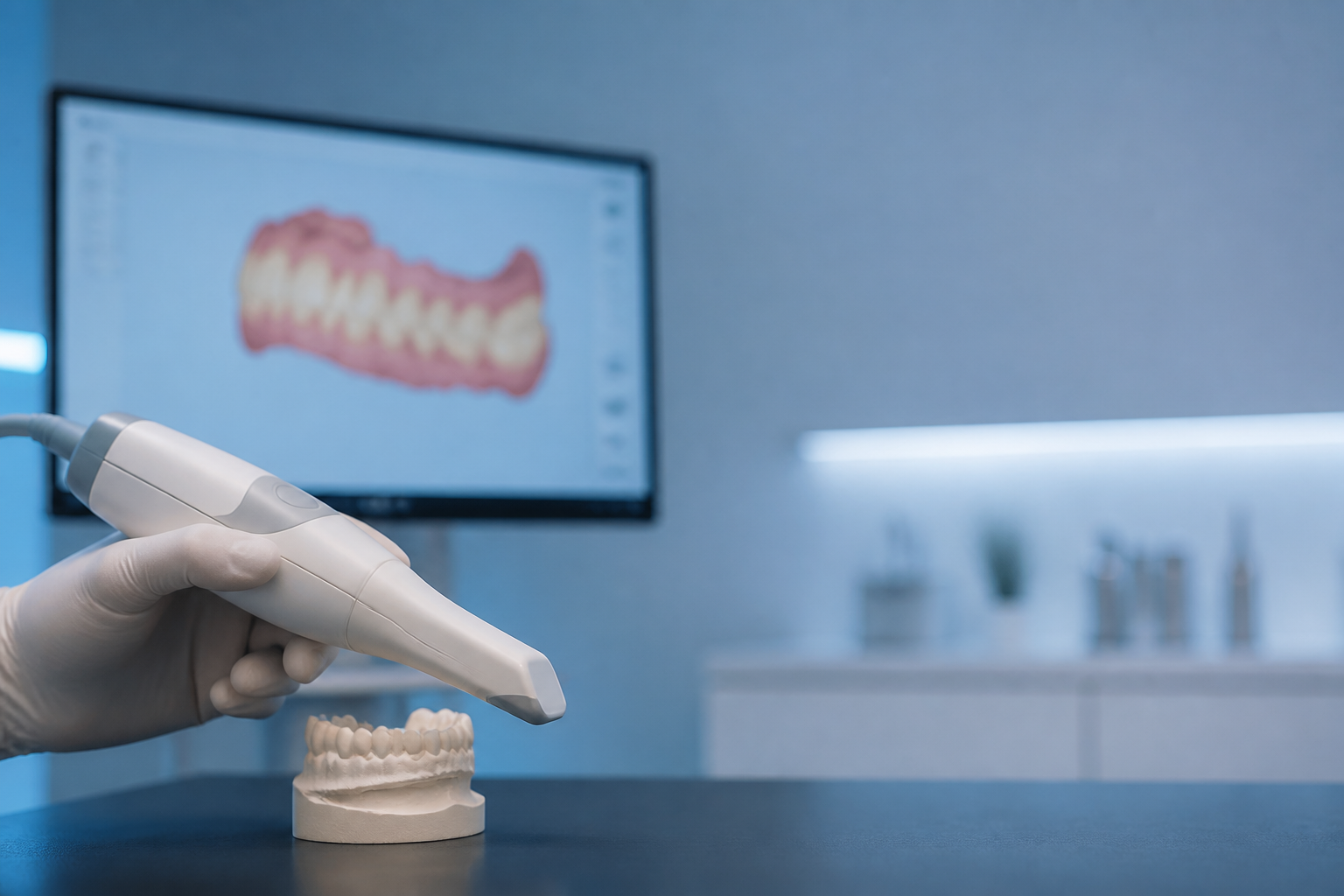
At Compass Dental Care in Parap, there’s now a faster, far more comfortable way to get new teeth. Dr Thien Pham uses a Trios intraoral scanner to capture a precise 3D model of your gums and bite in a matter of minutes — no putty, no trays, no gagging. That digital scan goes straight to the dental laboratory electronically, and for suitable cases your finished denture can be ready in as little as two weeks, often across as few as two visits.
This is what people mean by digital dentures, and it’s a genuine step up from the conventional staged process. Here’s exactly how it works, who it suits, and how fast it really is. If you’d like the full overview of denture types first, see our main page on Dentures in Darwin.
How Two-Visit Digital Dentures Work
The whole point of the digital pathway is that it removes the slow, uncomfortable steps and replaces them with a quick scan and precise computer design. For suitable cases it looks like this:
-
Consultation and digital scan (Visit 1). Dr Pham examines your mouth, checks your gums and any remaining teeth, and confirms whether the fast digital pathway is right for you. Instead of a putty impression, he passes the Trios scanner over your gums and teeth — a small wand that photographs your mouth in 3D. In minutes he has a precise digital model of your gums and how your bite comes together. There’s nothing to bite into and nothing to make you gag.
-
Digital design sent to the lab. Your 3D scan is sent electronically to the dental laboratory — no physical mould posted away, no waiting on a courier. The denture is designed digitally to match your gums, your bite, and the look you want, and that design drives how the finished denture is made.
-
Fit and adjust (Visit 2). When your denture comes back, Dr Pham fits it, checks the bite, and makes any small adjustments so it sits comfortably. Because the design started from an accurate digital scan rather than a hand-poured mould, the fit tends to be closer from the outset — which usually means fewer tweaks.
That’s the core of it: scan, design, fit. No impression trays, no wax try-in stage stretched across weeks, and far less time in the chair.
Why Digital Dentures Are More Comfortable and Accurate
The comfort isn’t just about skipping the putty on the day — the digital process tends to produce a better end result, too. Here’s what patients gain:
- No gag-inducing impressions. The single most disliked part of getting dentures is the impression tray. A Trios scan removes it entirely — the scanner simply glides over your gums.
- A more precise fit. A digital scan captures fine detail that a putty impression can miss, so the denture is designed to match your mouth more closely. A closer fit generally means fewer sore spots and fewer adjustment visits after fitting.
- Faster turnaround. Because the design is sent electronically and skips the slow staged steps, suitable cases are finished in a fraction of the time a conventional denture takes.
- Your denture is stored digitally. This is the quietly brilliant part. Your scan and design are kept on file, so if your denture is ever lost, broken, or damaged, a replacement can be reproduced accurately from the stored record — without starting impressions again from scratch.
How Fast Is It, Really?
Honesty matters here, so let’s be clear about the “two weeks / two visits” claim.
For suitable cases, the finished denture can be ready in as little as two weeks, often across as few as two visits — the scan-and-consult, then the fit. That’s dramatically quicker than a conventional denture, which can involve multiple appointments over several weeks: putty impressions, a wax try-in to preview the look, then the fit and adjustments.
But “as little as” is doing real work in that sentence. Not every case is a two-week case. What can make yours take longer:
- Extractions that need to heal. If teeth need to come out first, the gums usually need time to settle before a final denture is made, so the fit stays accurate as your mouth heals.
- Significant bone loss or complex bites that need more planning and careful staging.
- Implant-retained work, where dental implants need time to integrate with the bone before the denture clips on.
Dr Pham confirms at your consultation which pathway is right for you and gives you a realistic timeframe — not a one-size-fits-all promise. The two-week, two-visit route is a real option for many patients, but it’s offered where it genuinely suits the case.
Is Two-Visit Digital Dentures Right for You?
The digital pathway suits a lot of people — anyone wanting a new denture or a replacement for an old, loose, or worn one is often a good candidate. If your gums are healthy and stable and you’re not having teeth removed as part of the plan, there’s a good chance you can take the fast route.
The conventional staged approach still has its place. It may be the better choice if you have significant bone loss, if you’re having extractions that need time to heal, or if you’re going down the implant-retained path. None of that rules out digital tools — the scan is still used — but the timeline is longer by necessity.
The only way to know which applies to you is a consultation. Dr Pham assesses your gums, any remaining teeth, and your bite, and tells you honestly whether the two-visit digital pathway fits your situation or whether a staged approach will give you a better long-term result.
What Material Can I Have?
Choosing the digital pathway doesn’t limit your options. The same denture types and materials are available:
- Complete acrylic dentures for a full arch of missing teeth.
- Flexible Valplast partial dentures — lightweight, metal-free, with gum-coloured clasps.
- Cast chrome partial dentures — a thin, strong framework that’s less bulky and covers less of your palate.
If you’re weighing up partials, our guide on Valplast vs Chrome Dentures breaks down the trade-offs, and you can read more about Partial Dentures and Implant Dentures on our service pages. For figures, see our sibling guide on How Much Do Dentures Cost in Darwin — we keep pricing there rather than in this post.
Frequently Asked Questions
Does it hurt? Do I still need impressions?
No, and no. The Trios scanner simply photographs your mouth in 3D as Dr Pham glides it over your gums and teeth — there’s nothing to bite into, no tray, and no putty. Most patients find the scan quick and easy, and it removes the gagging that made traditional impressions so unpleasant.
Can everyone get two-visit dentures?
Many patients can, but not everyone. The fast digital pathway suits most people wanting new or replacement dentures with healthy, stable gums. Complex cases — significant bone loss, implant-retained dentures, or extractions that need time to heal — may follow the conventional staged approach instead. Dr Pham confirms which pathway is right for you at your consultation.
What if my denture breaks — do I need a new scan?
Usually not. Because your scan and denture design are stored digitally on file, a replacement can be reproduced accurately from that record without repeating the impression process from scratch. It’s one of the real advantages of the digital pathway over conventional dentures.
Are digital dentures as strong as conventional ones?
Yes. Digital dentures are made from the same materials as conventional ones — acrylic, flexible Valplast, or cast chrome — so they’re just as durable. The difference is in how the mould is captured and the denture designed, not in the final material. If anything, the more precise fit can mean less stress on the denture in everyday use.
How is this different from a conventional denture?
A conventional denture typically involves putty impressions and a wax try-in across multiple appointments over several weeks. The digital pathway replaces the putty with a Trios scan, sends the design to the lab electronically, and — for suitable cases — has your denture ready in as little as two weeks, often across as few as two visits.
Is the digital denture covered by a warranty?
Chrome and implant dentures come with a 12-month warranty. Flexible Valplast dentures carry our credit guarantee — if yours doesn’t work out within 12 months, we credit its full cost towards a different treatment. More broadly, if a treatment doesn’t work out we credit what you paid towards the next step, so you’re never left paying twice to get it right.
How much do two-visit digital dentures cost?
Digital dentures use the same materials as conventional ones, so pricing follows the denture type — acrylic full, Valplast partial, or chrome partial. We keep guide prices in our dedicated cost guide rather than in this post: see How Much Do Dentures Cost in Darwin for figures, and you’ll get an itemised written quote after Dr Pham’s consultation. We process HICAPS on the spot so you only pay the gap, and offer Zip Pay and Zip Money payment plans.
Ready for New Teeth Without the Putty?
If you’re tired of impression trays or want your new teeth faster, a two-visit digital denture may be the answer. The best next step is a consultation: Dr Pham will scan your mouth, confirm whether the fast digital pathway suits your case, give you a realistic timeframe, and provide a clear written quote before anything begins.
Call Compass Dental Care in Parap on (08) 8995 9530 or book an appointment online →
You can also explore our full range on the Dentures in Darwin page, compare Partial Dentures and Implant Dentures, or check figures in our dentures cost guide.
Compass Dental Care, Suite 102/12 Salonika St, Parap NT 0820. Open Monday–Friday 9am–5pm and Saturday 8:30am–12:30pm. We’re a registered DVA provider and welcome patients from Stuart Park, Fannie Bay, Nightcliff, Casuarina and Palmerston, and from across regional NT including Katherine, Alice Springs and Tennant Creek.


